Showing posts with label Lakes of Nepal. Show all posts

Phewa lake and Himalaya

Phewa lake and Himalaya
Phewa lake and Himalaya as seen from the peace pagoda near Pokhara. On the green hills between the lake and the Himalaya you can distinguish the well known spot of Sarangkot, a touristic site north of Pokhara famouse for paragliding and Himalaya views.

Phewa lake Pokhara


Phewa lake Pokhara
Picture of the north side of Phewa lake, near Parne Bazaar, some 4 km outside Pokhara

Nepal: Responding Proactively to Glacial Hazards

Glacial lake in Nepal Photo credit: flickr/magical-world

Downloads:

Full Case Study (PDF, 638 Kb)

Summary:

Glaciers in Nepal are shrinking due to warmer temperatures, forming glacial lakes which can burst and cause destructive glacial lake outburst floods (known as GLOFs) in downstream valleys. The Tsho Rolpa glacial lake is the largest of its kind in the Nepali Himalayas, and the threat of it flooding led the Government of Nepal to take proactive measures in the late 1990s. These included setting up an emergency warning system to alert local communities, and lowering the lake’s level by three meters. These measures, taken in 1997-98 are thought to have averted the prospect of a disastrous flood.
In addition, after detailed scientific and technical studies, a flood prevention system was put into place. This consisted of a channel cut to allow water to flow out of the lake, with the overflow used to power a micro-hydro plant. A permanent maintenance staff was also hired and the structures remain well-maintained. The early warning systems, however, ceased to be operational in 2002 despite the fact that a robust system was commissioned using the latest technology. This failure can be attributed to an absence of funding for maintenance, as well as lack of response by local communities, whom, the authors argue, had not been adequately educated about the risks of floods or trained in how to use the early warning system.

About the Authors:

Arun Bhakta Shrestha is a Climate Change Specialist in the Integrated Water and Hazard Management Program at the International Centre for Integrated Mountain Development (ICIMOD), a mountain-focused institution working in the eight countries of the Himalayas. His main areas of expertise include climate change, glaciers and glacial hazards, glacial lake outburst mitigation, atmospheric environment, remote sensing, and hydrological modeling. He was actively involved in the Tsho Rolpa Risk Reduction Project and was on the scientific team preparing the First National Communication of Nepal to the United Nations Framework Convention on Climate Change (UNFCCC). Arun has a Ph.D. in Earth Sciences from the University of New Hampshire, USA, and a Master’s degree in Hydraulic Engineering from Minsk, Belarus.
Susan Tambi Matambo has a Master’s degree in environmental management from the Yale School of Forestry and Environmental Studies. At Yale, she focused her masters research study on the influence of global institutions on domestic environmental policy. She worked in various capacities for the Global Environment Facility (GEF) Secretariat and Evaluation Office from 2004-2010, as well as with the Wildlife Conservation Society in Africa. Susan has lived in Africa, South East Asia and the United States and is currently an independent consultant working on climate change issues.

Rara --- The beautiful and biggest lake + Rara National Park


(for more picture click Rara...)


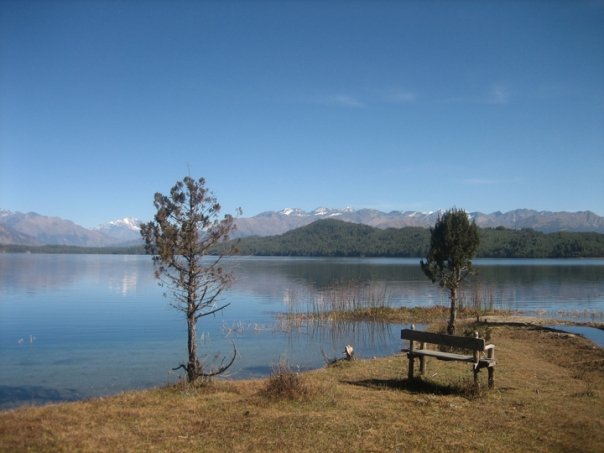
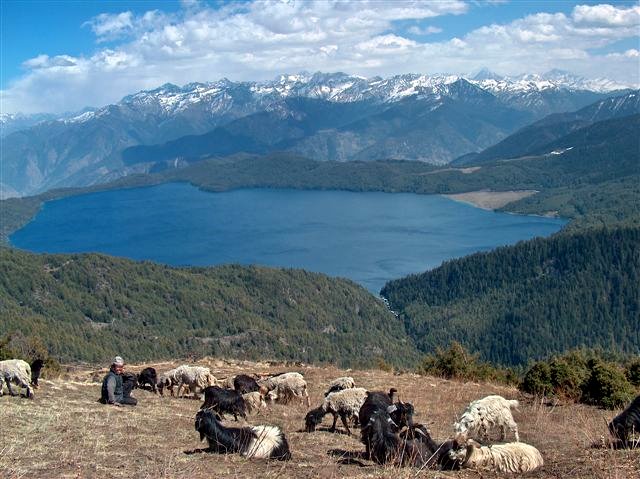
Rara Lake (2980 m) lies in the remote Karnali region in the north-west of Nepal and is centerpiece of Rara Lake National Park. Rara Lake is Nepals largest lake and is a clear blue mountain lake with juniper, spruce and pine trees along its shores and snowcapped peaks in the distance. We fly in to Jumla and the first part of the trek takes us through forests and over alpine meadows with herds of sheep and goats. After three days we reach the stunning Rara Lake with fantastic views of Dolpo and Tibetan mountains across the deep blue water. We spend a day exploring the area with abundant wildlife and enjoy the quiet beaches and the views. The four day return trek to Jumla takes us through remote villages and alpine pastures with great views of the mountain ranges on the border to Tibet and southern part of Humla.


Trekking in Rara Lake offers the best scenery on the north-western most side of Nepal. Within its confines lie the Rara national park, the smallest park in Nepal, where in turn the country's largest lake, the Rara Lake can be found (10.8 sq. km. At 2,990 meters). Considered one of the finest parks in the world, Rara National Park abounds in coniferous forest and is the ideal habitat for the musk deer, Himalayan black bear and other faunae. The Danfe (Impeyan Pheasant) the national bird of Nepal, flies above while a variety of fish, the snow trout, inhabit the Rara lake. Adding charm to the region are its generally open-hearted and friendly people. The trek can begin in Jumla (over an hours flight from Kathmandu) or from the nearer Nepalgunj.

Rara is a good destination point for trekking in the west. The trail is very much "off the beaten path" and affords glimpses of culture and scenery very different from those in the rest of the country. The centerpiece of the park is the biggest lake of Nepal. Along mountain paths and a series of picturesque villages, one reaches the magnificent banks of Rara lake. The park includes Trans- Himalayan valley with high ridges covered with forest and alpine pastures.


view of Rara


When is the best season?
The best season for this trek is half of February to First week of June and September to early December.
 

Half of February to First week of June: From the half of February until the first part of June temperatures are relatively warm, 10° to 15° warmer than in the fall. Mornings are bright and clear with the air slowly becoming hazier as the day progresses. The rhododendron forests in springtime are spectacular, with color displays that are "Himalayan" in beauty. June is warm and green with many fewer people - the sense of solitude is much greater than other seasons.

September to half of December: September to early December is an ideal time for the best mountain  views. The days are typically sunny and clear with moderate temperatures and the evenings are usually quite cold.
Note: July to August is the Monsoon period in Nepal. However, it is possible to do trekking in rain shadow area like Mustang, Rara, Dolpo, Annapurna circuit, Lantang valley, Everest base camp and Gokyo valley respectively.

How  can you trek in Rara Lake area ?
Rara Lake Trekking can be organize only camping (Tented Camp). On a camping trek you will sleep in tents. The staff includes a guide, cook, Sherpa and sufficient porters to carry all trekking gear. Even if you have never camped before, there is no need to worry that you won’t enjoy the experience. The tents we provide are roomy, the sleeping pads/ mattresses are comfortable and international style food of a high standard is freshly prepared and served. On all of our treks a bathroom tent is provided as well as a dining tent with tables and camp stools, providing a cozy, comfortable atmosphere to eat and chat with fellow trekkers during the evening.
 
How Camping Trek is Operated? 
In a typical Camping Trek, day starts around 6 a.m. with a cup of hot tea or coffee followed by a bucked of warm water for their washing and cleaning. After packing up their stuff and daypack, the trekkers are requested to leave their camp and meet at the dinning table for breakfast. The trek started around 7.30 - 8 a.m. and the kitchen staffs go ahead of the group.
Our well trained staff pack all camping equipment and gears and the porters carry them to the next camping site. The trekkers should carry only personal belongings that they may need for the day like water bottle, rain gear, camera, etc.


The Trekkers can decide on their own on time for viewing the beautiful landscape, taking photographs  and resting or making a short pause. The walk to the lunch spot normally takes 3 hours. Our cook and assistant serves hot lunch upon arrival. The afternoon walk takes about 3 to 4 hours to reach at the night camp around 4/5 p.m. Tea and snacks are served while our sherpa pitch the camp. The dinner is served around 6/7 p.m. in the dining tent lit with a pressurized lantern and furnished with table and camping tools. We provide high quality tents, foam and mattress, and a simple toilet tent in every camp for once comfort.

Fact of the Trek                              
Place Covers                   Rara Lake
Group Size                      Min.1, Max. 9
Trek Grade                     Moderate
Min. altitude                    2370m
Max. altitude                   3500m
Season                            February to June and September to November
Transportation                 Tourist Bus (Kathmandu - Kathmandu)
Trek Duration                  14 Days
Age Limit                        10 to 70

Tilicho Lake


Tilicho Lake is considered as one among the highest lakes in the world. However, it is very less frequented due to the difficulty in reaching it. The Lake is at an altitude of about 4949 meters and the surroundings are very difficult to manage making it very inhospitable. The people who trek, especially people who prefer difficult and challenging treks, towards Annapurna Circuit sometimes choose to pass through the Tilicho Lake as an alternate route. It is very difficult and tedious, challenging all the experience of the trekkers. Hence, it is not very popular among tourists.
There are several mid-land and low-land lakes in Nepal. However, the above mentioned are the most popular ones that a tourist or trekker should not miss. The scenic beauty of the valleys and mountains surrounding the lakes makes every effort worth the while.
Tilicho Lake
Tilicho Lake: Photo by Susumu Miyasaki

Gosainkunda Lake


We find the holy lake of Gosainkunda to the north Katmandu. This lake is also called Gosain Kunda and is a freshwater lake. The lake is considered holy especially among the Hindus. They believe that the rock seen in the lake is the remnant of a Shiva temple. The legend behind this is that this lake is considered to be the home of the Shiva and Gauri of the Hindu mythology. The great epics like the Mahabharath and the Ramayan speak of this lake as having originated from the churning of the ocean that was done by the gods and demons in order to get nectar, endowed with the power of immortality. The lake holds immense reverence especially during the festival of Janai Purnima when the devotees throng the place from all over Nepal and India. Another legend has it that Shiva was very thirsty after having drunk the poison puked by the great snake used for churning the ocean. He came here and with his trident dug the very spot where the lake exists and drank from it to quench his thirst. Hence, due to these several legends attached to the lake, it has been revered by one and all.
The lake is located in the district of Rasuwa at a height of 4300 meters. The best and easy way to reach the location is by reaching Rasuwa. The lake remains frozen for about six months, and then it begins to melt to form the river Trishuli. The lake falls in the path of Dhunche- Gosaikunda trek path with a lot of trekkers. The simple life of the Sherpas who inhabit the place is another reason for the trekkers to choose this path. One need not mention the kind of scenery that will meet the eye. A little farther from this path, the trekkers will find the Langtang trek path. On the outskirts of the lake is the Langtang valley, which is another beautiful scenic spot. There is also the Langtang National park that is very popular among the people who trek in this path. The Lauribina pass, a very difficult pass to trek, can also be found on the outskirts.
Gosainkunda Lake
Gosainkunda Lake: Photo by Darren
Gosainkunda Lake
Gosainkunda Lake: Photo by Kamal Raj

Phoksundo Lake


The deepest lake of Nepal is located in the lower Dopla area of Nepal. It is having a depth of 650 meters and is about 4 kms in length. The lake is considered very holy by the local people here. The Dolpo community has been residing on the banks of the lake from time immemorial. The very traditional Tibetans reside on the upper Dolpo region whereas in the lower Dolpo region one can see the existence of Buddhism and Bon-Po. One can see 20 or more Stupas that are on the southern side and a Gompa, which is to the east side where prayers take place. Hence, the lake is very holy for the locals especially the Buddists.
Another major attraction of the lake is the crystal-clear aquamarine green colour of the waters. The view of the Himalayas just add to the beauty of the scenery. The lake’s southern end is the Ringmo village, which is on the nearly 40,000 year old dam. It was this very dam that caused the formation of the lake. Look further, and there are beautiful waterfalls that draw a huge amount of visitors to this site every year.
Shey Phoksundo National Park can be cited as the next best reason to visit this lake. It covers the districts of Dolpa and the Mugu. This national park is considered as the largest with an area coverage of about 3555 sq kms. The park has several varieties of flora and fauna of national importance. It also protects several endangered animals like the musk deer and the snow leopards.
Phoksundo Lake
Phoksundo Lake: Photo by Jamie McGuinness – Project Himalaya
Phoksundo Lake
Phoksundo Lake: Photo by Jamie McGuinness – Project Himalaya

Phewa Lake


People of Nepal consider the Phewa Lake as the pride of Pokhara. Phewa, as mentioned is located in Pokhara and is the biggest lake in Pokhara. Very famous for the boating, it is the second largest lake in the whole of Nepal covering about 4.43 kms. The lake is very beautiful and reflects in its clear waters the hills of Kaskikot and Sarangot flanking it. You will also find the beauty of the snow clad mountains of Annapurna and Macchapuchre reflected in the waters. Another interesting attraction is the temple, Barahi Bhagwati, located in the center of the lake. The temple is dedicated to Varahi, an incarnation of Vishnu, the Hindu deity. It is a two storied structure in the typical pagoda style that Nepal is famous for. To the east of the banks of the lake are the souvenir shops and hotels that are very popular among the tourists. You will find all kinds of souvenirs, books and lodges that provide good accommodation, all in this one place called Baidam. Phewa Lake, also called the Fewa Lake, is rightly called the “Beauty of Pokhara”.
Phewa Lake
Phewa Lake: Photo by Tom Booth
Phewa Lake
Phewa Lake: Photo Doug Letterman

Rara Lake


If you ever visit the Rara Lake, make sure that it is during the months of spring and autumn as the lake is at its best during these months. Located to the north west of Nepal, it is about 2980 meters long making it the largest lake in Nepal. It is also popular as the Mahendra Tal. If it is a magnificent view that you want to capture then Chuchemara Danda will be the best place from where you can capture the best of the lake. The easiest way to get here is via Jumla in the Karnali zone. The source of water for the lake is from the Karnali River of this region.
The major attraction that draws people to this lake is the fact that it is the biggest lake in Nepal. The presence of the Rara national park in close vicinity is an added bonus. The national park is home to several rare and endangered species like Red Panda, Black Bear etc. It is a paradise even for the bird lovers as there are several migrating birds that visit the Wildlife preserve. There also exists very diverse vegetation that can be seen here.
You will find several trekkers and also river rafters who enjoy the rapids that the river Karnali is very famous for. On the whole, Rara Lake can be best described as a nature lover’s delight.
Rara Lake
Rara Lake: Photo by Sangharsha
Rara Lake
Rara Lake: Photo by Niraj Giri

Word Heritage Tour Kathmandu Valley
Twitter Delicious Facebook Digg Stumbleupon Favorites More

 
Design by Free WordPress Themes | Bloggerized by Lasantha - Premium Blogger Themes | Design Blog, Make Online Money