Showing posts with label Culture of Nepal. Show all posts

Bisket Jatra offerings Bhaktapur

Bisket Jatra offerings Bhaktapur
Offerings on Khalna Tole in Bhaktapur on the occasion of the Bisket Jatra festival on Nepali New Years day.

Woman with offerings in Bhaktapur

Woman with offerings in Bhaktapur
Woman with offerings in Bhaktapur heading for the huge pole and lingam during the Bisket Jatra festival.

Bisket Jatra festival

Bisket Jatra festival
Picture of two chariots on Khalna Tole in Bhaktapur on the occasion of the Bisket Jatra festival on Nepali New Years day.

Buddhism in Nepal


Based on meditations of GAUTAMA SIDDHARTA, also called Sakyamuni (wise man of the Sakya clan) and later the Buddha (Enlightened one). Philosophical doctrine and code of conduct. Based on the three jewels, Buddha himself, dharma, Buddha's teachings and prescribed conduct, and sangha the community.
Buddha was born in Lumbini, Nepal around 544 BC. Son of raja (title for rulers and wealthy landlords) who sought reason for human misery. Left his family and experimented and traveled; found enlightenment through meditation at Bodh Gaya.
Dharma is the doctrine of four truths discovered through meditation.
  1. Existence is unhappiness.
  2. Everything in life brings suffering, birth, responding to needs and death. Origin of suffering is in needs, wants and desires of men and being attached to material values (illusions of the senses).
  3. Unhappiness is caused by selfish cravings or passions.
  4. Selfish cravings can be eliminated by renunciation desires and following the eight-fold path:
1. Right views, understanding and vision
2. Right purpose, aspiration and intention
3. Right speech
4. Right vocation and honest livelihood
5. Right conduct and action
6. Right effort and dedication
7. Right alertness and mindfulness
8. Right concentration and meditation.
Sangha is community of Buddhists. Used to mean monastic community but concept broadened. Showing the path to enlightenment.
About 100 years after Buddha's death, communities disagreed and split over ways to achieve enlightenment. Traditional school of Theravada Buddhists follows Buddha's original teachings. Mahayana school accepts some changes, various ways to enlightenment (became Zen).
Scripts appeared also introducing changes. Deification of Buddha, and separation between mortal Buddha like Siddharta who will reappear, and transcendental ones which are only understood through meditation (Dhyani Buddhas). While enlightenment reached through individual effort, idea spread that meditation Buddhas give merit to those who worship them. Bodhisattvas are humans who reached enlightenment but instead of joining nirvana chose to help others reach enlightenment.
tantrism
Movement from with the Mahayana school appeared in first century AD in fringe areas of India. Hindus and Buddhists came into contact with animist religions and integrated beliefs and practices. Yoga, physical exercises to control body functions, mantras, repetitive utterances, bijas, magic syllables, use of designs and objects such as mandala and dorje. Transformed into Lamaism which penetrated also into Nepal. Purpose was to shorten the road to enlightenment with such practices.
Prayer Flags and Prayer Wheels take prayers to the sky, to the divinities. Idea that movement creates power. Prayer wheels rotated clockwise to send mantra to the divinities. Usually brass cylinder with pre-Sanskrit script, ranja, writing. The wheel contains parchment like paper upon which the Tibetan incantation OM MANI PADME HUM (image top) is repeatedly printed. Some rough translations of this mantra are
  • Oh, the jewel (mani) concealed in the lotus (padma) ah.
  • One specific interpretation of this incantation is that of a prayer the Boddhisattva Padmapani who controls reincarnation

    Oh, Padmapani, give me the jewel in the lotus, which is the blessing on non-rebirth or attainment of Nirvana through the acceptance of the Buddhist doctrine.
  • A more general interpretation is

    Oh, may the jewel remain in the lotus, meaning may Buddha's teachings remain pure in our minds and souls.
Vajra or Dorje looks like two crowns with bases attached by a metal ball. Each crown has four outer spokes and one inner spoke to represent the meditation Buddhas, united at the top to convey that they are but one. Means "thunderbolt" symbolic attribute of Hindu god Indra who is the divine power of natural forces, and the "diamond", the substance that is translucent and unbreakable. The Dorje is primarily a symbol of power but is also a representation of the male.
Ghanta, the bell is bronze and topped with crown shaped handle. The bell symbolizes the female. In a metaphysical sense, male represents knowledge and female represents wisdom. Both important to rituals.
Statues and temples for Buddha or to Bodhisattvas.
Chaitya, a somewhat conical stone structure, shrines for gratitude or worship. Always show four statues representing each of the dhyana-Buddhas or meditation Buddhas.
Facing north, Buddha Amogasiddhi with right hand upward and palms outward to express fearlessness and blessing (associated with green).
Facing east, Buddha Akshobya, right hand outstretched with fingers touching earth calling Earth-goddess to witness that Buddha resisted temptations put forth by demon Mara who was trying to lure him away from his meditations. Also thought of as calling to witness Buddha's deserving supreme enlightenment. (blue)
Facing south, Buddha Ratnasambhawa with right hand palm outward to express compassion. yellow
Facing west, Buddha Amithaba, two hands folded, resting on lap in meditation. red.
Some chaityas or scrolls show a fifth central figure, the Buddha Vairocana who is above or in the middle of the previously mentioned four. Hands folded in front of chest he is perfect sovereignty as "turning the wheel of the Buddhist doctrine." white.
Another common Buddhist statue is that of the Tara, either white or green Tara. Were the two wives of Srong Tsam Gampo, King of Tibet that they converted to their faith, Buddhism. Deified.
Bodhisattvas honored often are Padmapani, holds a lotus flower and is master or reincarnations. Manjushri is honored as bearer of wisdom by Buddhists and Hindus. Holds book of knowledge in left hand and a sword to strike ignorance with right.
A historical look demonstrates that artistic expression reflects the religious and ethnic diversity within the valley. Nepalese art became prominent in the 13th century through the work of Balbahu, also known as Arniko, an architect for the king of Tibet and possibly the Emperor of China. Nepalese art is recognized for its candour, simplicity and harmony balanced with intricacy and decoration. The Malla dynasty promoted all forms of artistic expression from the 14th to the 19th centuries. Tibetan forms of expression influenced art in the valley beginning in the 17th century. Tantric and Buddhist themes introduced greater differentiation between Nepalese and Indian art.

Art and Religion


Nepalese expressions of art, classical and modern, are imbedded in the daily practice of religion. Unique craftsmanship is most easily found in temples, architecture, shrines, fountains and the design of religious objects. Understanding the various religious creeds as well as the representations of gods and goddesses enhances the appreciation of Nepalese art.
Hinduism
Buddhism
Tantrism: explains Prayer Wheel at upper right
Architecture
Painting
Literature
Bronze Figures
Jewelry
Pottery
Preservation of Art
Nepal, the only country that is a Hindu state, boasts tremendous religious tolerance of the many faiths practiced within its borders.
  • Hinduists predominate in Nepal as 86.5% of the population.
  • The next largest religious groups consist of Buddhists, 7.8%, and
  • Muslims, 3.5% of the population.
Common to all of these religions is the integration of religious expression within everyday life. In contrast with Western religions, these religions involve codes for- individual behavior and daily rites of worship. In the morning, people gather at temples, sanctuaries or river banks to offer prayers and puja.
hinduism
The word Hinduism was introduced in the 19th century to define the aggregate beliefs of the Arya, immigrants who left Central Asia in 1500 BC, and animist religions of native populations in India.
Basic concepts. Cosmic law rules the good order of the world, be aware and respect cosmic law. Lead the life of a good Hindu, observe rules, perform all rites, accept the caste of birth. Caste system supplies code of conduct and rites done. Encompasses all parts of life; rites but also who to take drink from, associate with, marry, etc.
Principles of Hinduism. Dharma religious law and moral code by which people can earn enlightenment. Karma is the life balance of action and reaction; individuals responsible for decisions and consequences. Leading good Hindu life will bring rebirth into a better life. Samsara is cycle of reincarnations determined by karma. Moksha is liberation from samsara; individual unites with universal timelessness, ultimate serenity, nirvana. Path to moksha is good Hindu life.
Each deity has different names, as well as different symbols, attributes, tasks and powers according to what god it represents. Each deity has a vehicle, an animal usually which serves master. Primary Hindu gods are Brahma, Vishnu and Shiva.
Brahma is the creator of the universe. Attributes are the rosary, the receptacle of holy water, the ladle and the book. Mount is a goose or swan. Brahma usually represented with four heads, allows him to watch over world. Very few statues of Brahma since creation is done.
Saraswati is Brahma's consort and is goddess of knowledge, learning and music. She is often portrayed with four arms, plying the veena (seven stringed musical instrument) with two hands as well as holding a rosary and a book. Sits on a lotus riding a peacock or a swan. Often a crescent moon on forehead. Worshipped by Buddhists as a form of Manjushri, the Bodhisattva of wisdom.
Vishnu is the preserver of life and the world. Attributes are the conchshell, the disc, the lotus and the mace. Mount is Garuda, a mythical half-man and half-bird. He often appears in some of the following forms:
Narayan, which means "he who guides development in all fields" or universal knowledge.
Buddha, ninth reincarnation of Vishnu.
Rama, warrior who rescued wife Sita who had been taken by Ravan, demon-king of Ceylon.
Krishna, personification of manhood who bewitched 'gopis' (milkmaids and shepherdesses) with whom he frolicked. Forms of Rama and Krishna more popular in India.
Shiva, the destroyer and regenerator. Attributes are the trident, the tambourine, the tiger skin, the club, and the lingam. Mount is Nandi the bull.
Pashupati, master and protector of animals, especially of cattle, who is the friend of life.
Bhairav, the form of Shiva eager to destroy everything, including evil. Usually a black statue, with necklace of human skulls.
Hanuman, the monkey god. Symbolizes faithfulness and willingness to help. Associated with successful military undertakings and assisted Rama in fight against demon-king Ravan who kept Ram's wife Sita imprisoned for 12 years.
Ganesh, (Ganapati) one of the most popular gods in Nepal. Infallible, charitable and has power to decide fate of any human enterprise. Universal power. Shiva and Parvati's son. Shiva was away, Parvati bore a son while he was gone. Ordered son not to let anyone in. Shiva came home, young guardsman barred him from entering so he chopped off the guard's head with sword. Parvati terrorized, Shiva promised to bring him back to life by beheading the first living creature he found in the forest. Saw elephant first, so cut off its head, rushed back and put it on Ganesh's head. Ganesh always dressed in red, four arms and body covered with layers of sandalwood paste. Only one tusk, mount is a shrew, sometimes mistaken for rat or mouse. Consequently all three are sacred.
Parvati, Shiva's consort. In benevolent forms, Devi, Uma, Shakti or Annapurna as the "dispenser of abundance." As wreaking havoc, forms of Kali, Durga or Bhagavati.

Miss Nepal 2010

Sadichha ShresthaSadichha Shrestha - Miss Nepal 2010

Nepali Festival Bada Dashain


During the month of Kartik (late September and early October), the Nepalese people indulge in the biggest festival of the year, Dashain. Dashain is the longest and the most auspicious festival in the Nepalese annual calendar, celebrated by Nepalese of all caste and creed throughout the country. The fifteen days of celebration occurs during the bright lunar fortnight ending on the day of the full moon. Thorough out the kingdom of Nepal the goddess Durga in all her manifestations are worshiped with innumerable pujas, abundant offerings and thousands of animal sacrifices for the ritual holy bathing, thus drenching the goddess for days in blood.

Dashain commemorates a great victory of the gods over the wicked demons. One of the victory stories told is the Ramayan, where the lord Ram after a big struggle slaughtered Ravana, the fiendish king of demons. It is said that lord Ram was successful in the battle only when goddess Durga was evoked. The main celebration glorifies the triumph of good over evil and is symbolized by goddess Durga slaying the terrible demon Mahisasur, who terrorised the earth in the guise of a brutal water buffalo. The first nine days signify the nine days of ferrous battle between goddess Durga and the demon Mahisasur. The tenth day is the day when Mahisasur was slain and the last five days symbolise the celebration of the victory with the blessing of the goddess. Dashain is celebrated with great rejoice, and goddess Durga is worshiped throughout the kingdom as the divine mother goddess.
 In preparation for Dashain every home is cleansed and beautifully decorated, painted as an invitation to the mother goddess, so that she may visit and bless the house with good fortune. During this time the reunion of distant and nearby relatives occur in every household. The market is filled with shoppers seeking new clothing, gifts, luxuries and enormous supplies of temple offering for the gods, as well as foodstuffs for the family feasting. Thousands of sheep, goats, ducks, chicken and water buffalo are prepared for the great slaughter. All types of organisations are closed for ten to fifteen days. Labourers are almost impossible to find; from the poor to the rich, all enjoy the festive mood. Anywhere you go the aroma of 'Vijaya Dashami' is found.
The first nine days of Dashain are called Nawa Ratri when tantric rites are conducted. In Nepal the life force is embodied in the divine energy and power of the female, depicted as goddess Durga in her many forms. All goddess who emanated from goddess Durga are known as devis, each with different aspects and powers. In most mother goddess temples the deity is represented simply as a sacred Kalash, carved water jug or multiple handed goddess holding murderous weapons. During these nine days people pay their homage to the goddess. If she is properly worshiped and pleased good fortunes are on the way and if angered through neglect then misfortunes are around the corner. Mother goddess is the source of life and everything.
The first day of Dashain is called Ghatasthapana, which literally means pot establishing. On this day the kalash, (holy water vessel) symbolising goddess Durga often with her image embossed on the side is placed in the prayer room. The kalash is filled with holy water and covered with cowdung on to which seeds are sown. A small rectangular sand block is made and the kalash is put in the centre. The surrounding bed of sand is also seeded with grains. The ghatasthapana ritual is performed at a certain auspicious moment determined by the astrologers. At that particular moment the priest intones a welcome, requesting goddess Durga to bless the vessel with her presence. 

The room where the kalash is established is called 'Dashain Ghar'. Generally women are not allowed to enter the room where Dashain puja is being carried out. A priest or a household man worships the kalash everyday once in the morning and then in the evening. The kalash and the sand are sprinkled with holy water everyday and it is shielded from direct sunlight. By the tenth day, the seed will have grown to five or six inches long yellow grass. The sacred yellow grass is called 'Jamara'. It is bestowed by the elders atop the heads of those younger to them during the last five days when tika is put on. The jamara is taken as a token of Goddess Durga as well as the elders blessing.
As days passes by regular rituals are observed till the seventh day. The seventh day is called 'Fulpati'.
In fulpati, the royal kalash filled with holy water, banana stalks, jamara and sugar cane tied with red cloth is carried by Brahmans on a decorated palanquin under a gold tipped and embroidered umbrella. The government officials also join the fulpati parade. With this the Dashain feasting starts.
The eighth day is called the Maha Asthami: The fervour of worship and sacrifice to Durga and Kali increases. On this day many orthodox Hindus will be fasting. Sacrifices are held in almost every house through out the day. The night of the eighth day is called 'Kal Ratri', the dark night. Hundreds of goats, sheep and buffaloes are sacrificed at the mother goddess temples. The sacrifice continues till dawn. While the puja is being carried out great feasts are held in the homes of common people where large amount of meat are consumed.
The ninth day is called Nawami: Temples of mother goddess are filled with people from dawn till dusk. Animals mostly black buffaloes are slaughtered to honour Durga the goddess of victory and might and to seek her blessing. Military bands play war tunes, guns boom and officers with beautifully decorated medals in full uniform stand there. When the function ends the courtyard is filled ankle deep with blood. On this very day the god Vishwa Karma, the God of creativity is also worshiped. All factories, vehicles, any machinery instruments and anything from which we make a living are worshiped. We also give sacrifices to all moving machinery like cars, aeroplanes, trucks etc. to get the blessing from goddess Durga for protection for vehicles and their occupants against accidents during the year. The entire day is colourful.
The tenth day is the Dashami: On this day we take tika and jamara from our elders and receive their blessing. We visit our elders in their home and get tika from them while our younger ones come to our home to receive blessing from us. The importance of Dasain also lies in the fact that on this day family members from far off and distant relatives come for a visit as well as to receive tika from the head of the family. This function continues for four days. After four days of rushing around and meeting your relatives Dashain ends on the full moon day, the fifteenth day. In the last day people stay at home and rest. The full moon day is also called 'Kojagrata' meaning 'who is awake'. The Hindu goddess of wealth Laxmi is worshipped. On this day the goddess Laxmi is given an invitation to visit each and everyone.
After Dashain everyone settles back to normal. After receiving the blessing of goddess Durga, people are ready to work and acquire virtue, power and wealth. Dashain thus is not only the longest festival but also the most anticipated one among all the festivals ofNepal.

Culture Heritage of Nepal

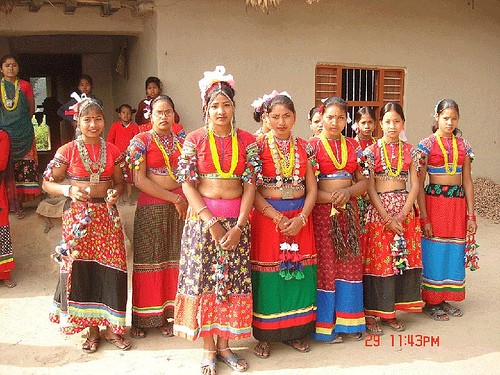
Nepal is blessed with a rich cultural heritage. Culture has been called 'the way of life for an entire society'. The statement holds particularly true in case of Nepal where every aspect of life, food, clothing and even occupations are culturally classified. In a society so feudalistic and so fractured across class lines, cultural heritage comes as a fresh wind. The culture of Nepal includes the codes of manners, dress, language, rituals, norms of behavior and systems of belief.

The culture of Nepal is a unique combination of tradition and novelty. The traditions are followed as they were and new customs are created to keep pace with the changing times. It is surprising to note that a country as poor, illiterate and backward as Nepal displays such flexibility when it come to incorporating traits from other cultures. Culture in Nepal is an assemblage of music, architecture, religion and literature. The mountain kingdom of Nepal is multi-ethic and multi-lingual. The land is rich with unique cultural groups like Tharu,Yadav, Ahir, Newars and others. 

Nepalese are among the most hospitable hosts. This is the reason for which tourists from far and wide enjoy coming to Nepal time and again. Nepalese are culturally warm, hospitable and affectionate hosts who place their heart above their head. Religion is the lifeblood of the Nepalese. Officially it is a Hindu country, but in practice the religion is a syncretism of Hindu and Buddhist beliefs with a pantheon of Tantrik deities tagged on. 

Nepal's food is surprisingly dull given that it lies at the intersection of the two great gastronomic giants India and China. Most of the time meals consist of a dish called dhal-bhat-tarkari that is a combination of lentil soup, rice and curried vegetables. It can hardly be considered, a dynamic national cuisine. On the other hand, Nepal has adapted famously to Western tastes, markedly evident in Katmandu's smorgasbord of menus: Mexican tacos; Japanese sukiyaki; Thai chocolate; Chinese marshmallows; onion and minestrone soup; borscht, quiche and soy burgers; and some of the best desserts - apple and lemon pies, almond layer cakes, fruit cakes - found anywhere in the world.
Art and Crafts of Nepal
Nepalese art is heavily inspired from Hinduism and Buddhism. The 2 millennium old Hindu and Buddhist heritage has survived various onslaughts and is still influencing the Nepalese art and craft tradition. Following are the various art and craft forms of Nepal.

Fairs and Festivals in Nepal
Nepal has a vibrant Hindu past and that's reflected in most of its festivals and celebrations. Besides, being the close neighbor of India, Nepal has had a constant history of cultural exchange with it. Therefore most of the Hindu festivals that are celebrated in India are celebrated in Nepal as well. The most important of these festivals are Dipawali and Holi.
Nepali Music
The rhythm, beats, bounce of Nepali traditional folk and classical music is spiritual enough to sooth you and entertaining enough to cheer you. Music is associated with every event in Nepal, then be it birth, marriage, festivals or National events. 

Cuisines of Nepal
The most prevalent Nepali dish is 'Daal, Bhaat and Tarkaari' (lentils, rice, vegetable curry respectively). This is the main course served in the most Nepalese houses irrespective of the economic conditions, that too in both lunch as well as dinner. Nepali food is much less spicy than Indian food, and many dishes are Tibetan in origin. It seems that Indian influence is only confined to Southwestern part of Nepal.
Language Of Nepal
Nepal is a multi-cultural and multi-ethnic country. The Nepalese society has acted as the melting pot for various ethnic groups. Almost all of these ethnic groups have their own languages. Nepali or Nepalese is the major language of Nepal. It is also the official language of Nepal. There are other languages too that are widely spoken in Nepal such as Newari, Bhojpuri, Awadhi and Maithali. While the Newar community speaks the former, the immigrants from the Indian states of Bihar and Eastern Utter Pradesh speak Bhojpuri, Awadhi and Maithali.
People Of Nepal
Perched on the Southern slopes of the Himalayan Mountains, the Kingdom of Nepal is ethnically diverse. The Nepalese are descendants of three major migrations. These migrations have taken place from India, Tibet, and Central Asia. Among the earliest inhabitants were the Newar of the Kathmandu Valley and aboriginal Tharu in the southern Tarai region.


The ancient kingdom of Nepal is a completely new world


lovely Nepalese children
Nepal and India are two ancient kingdom located in the junction of two great civilizations is the mix of channels. Carats from the 8th century BC, who established the first kingdom of the end of the beginning, the local civilization bred in the development of this valley, making it inclusive of the diversity of civilization corridor. This ancient country is a completely new world. 
Kathmandu
Kathmandu Valley in Nepal economic and cultural center, where represents the concentration of a large number of ancient culture heritage of Nepal, Nepal belongs to the largest concentration of world cultural heritage places.
a lot of people are the most like the old palace Buck Tabb, here known as" open-air museum" and" living sites" , you can enjoy the rich artistic temples, such as Nepal, one of the hallmarks of Virginia Tabora tour the temple, you can select exquisite handicrafts of Nepal.

Cultural Heritage


 Cultural Heritage
 
 
Nepal is blessed with a rich cultural heritage. Culture has been called 'the way of life for an entire society'. The statement holds particularly true in case of Nepal where every aspect of life, food, clothing and even occupations are culturally classified. In a society so feudalistic and so fractured across class lines, cultural heritage comes as a fresh wind. The culture of Nepal includes the codes of manners, dress, language, rituals, norms of behavior and systems of belief. The culture of Nepal is a unique combination of tradition and novelty. The traditions are followed as they were and new customs are created to keep pace with the changing times. It is surprising to note that a country as poor, illiterate and backward as Nepal displays such flexibility when it come to incorporating traits from other cultures. Culture in Nepal is an assemblage of music, architecture, religion and literature. The mountain kingdom of Nepal is multi-ethic and multi-lingual. The land is rich with unique cultural groups like Tharu,Yadav, Ahir, Newars and others.
Nepalese are among the most hospitable hosts. This is the reason for which tourists from far and wide enjoy coming to Nepal time and again. Nepalese are culturally warm, hospitable and affectionate hosts who place their heart above their head. Religion is the lifeblood of the Nepalese. Officially it is a Hindu country, but in practice the religion is a syncretism of Hindu and Buddhist beliefs with a pantheon of Tantrik deities tagged on.

Nepal's food is surprisingly dull given that it lies at the intersection of the two great gastronomic giants India and China. Most of the time meals consist of a dish called dhal-bhat-tarkari that is a combination of lentil soup, rice and curried vegetables. It can hardly be considered, a dynamic national cuisine. On the other hand, Nepal has adapted famously to Western tastes, markedly evident in Katmandu's smorgasbord of menus: Mexican tacos; Japanese sukiyaki; Thai chocolate; Chinese marshmallows; onion and minestrone soup; borscht, quiche and soy burgers; and some of the best desserts - apple and lemon pies, almond layer cakes, fruit cakes - found anywhere in the world.

Art and Crafts: Nepalese art is heavily inspired from Hinduism and Buddhism. The 2 millennium old Hindu and Buddhist heritage has survived various onslaughts and is still influencing the Nepalese art and craft tradition. Following are the various art and craft forms of Nepal.

Fairs and Festivals: Nepal has a vibrant Hindu past and that's reflected in most of its festivals and celebrations. Besides, being the close neighbor of India, Nepal has had a constant history of cultural exchange with it. Therefore most of the Hindu festivals that are celebrated in India are celebrated in Nepal as well. The most important of these festivals are Dipawali and Holi.

Music: The rhythm, beats, bounce of Nepali traditional folk and classical music is spiritual enough to sooth you and entertaining enough to cheer you. Music is associated with every event in Nepal, then be it birth, marriage, festivals or National events.

Cuisines: The most prevalent Nepali dish is 'Daal, Bhaat and Tarkaari' (lentils, rice, vegetable curry respectively). This is the main course served in the most Nepalese houses irrespective of the economic conditions, that too in both lunch as well as dinner. Nepali food is much less spicy than Indian food, and many dishes are Tibetan in origin. It seems that Indian influence is only confined to Southwestern part of Nepal.

Languages: Nepal is a multi-cultural and multi-ethnic country. The Nepalese society has acted as the melting pot for various ethnic groups. Almost all of these ethnic groups have their own languages. Nepali or Nepalese is the major language of Nepal. It is also the official language of Nepal. There are other languages too that are widely spoken in Nepal such as Newari, Bhojpuri, Awadhi and Maithali. While the Newar community speaks the former, the immigrants from the Indian states of Bihar and Eastern Utter Pradesh speak Bhojpuri, Awadhi and Maithali.

People: Perched on the Southern slopes of the Himalayan Mountains, the Kingdom of Nepal is ethnically diverse. The Nepalese are descendants of three major migrations. These migrations have taken place from India, Tibet, and Central Asia. Among the earliest inhabitants were the Newar of the Kathmandu Valley and aboriginal Tharu in the southern Tarai region.


Word Heritage Tour Kathmandu Valley
Twitter Delicious Facebook Digg Stumbleupon Favorites More

 
Design by Free WordPress Themes | Bloggerized by Lasantha - Premium Blogger Themes | Design Blog, Make Online Money